Driveway Done & Power Close
San Luis, CO 81152
Costilla County, Colorado
Land Description
Your 2.53-Acre Colorado Mesa Retreat on Wild Horse Mesa
Escape the Ordinary. Embrace the Extraordinary. Own Your Freedom.
This is your moment. The moment when everything changes. When you stop dreaming about mountain living and start living it. When you finally say yes to the life you've always imagined but never thought possible.
This is not just land. This is your freedom manifest in 2.53 pristine acres of Colorado high desert mesa where wild horses still roam free and the spirit of the Old West lives on.
Property Snapshot: Where Dreams Become Reality
Your Mesa Kingdom Awaits
Size: 2.53 acres of pristine Colorado mesa land
Location: Wild Horse Mesa, Costilla County, Colorado
GPS Coordinates: 37.1347, -105.4757
Parcel Number: 71213400
Legal Description: W.H.M. Section D BLK 39 Lot 23
Zoning: Vacant Residential - Maximum building flexibility
Access: Mesa Drive - County-maintained road access
Annual Taxes: Just $55.20/Year - Less than your monthly streaming subscriptions
HOA/POA: None - Your land, your rules, your freedom
Water: Holding tank/cistern system
Sewer: Septic system
Utilities: Off-grid ready (Solar, wind, generator)
Building and Use Options:
Site-built homes welcome with 600 square foot minimum
Mobile homes allowed (1976 or newer)
Camp for 14 days every 3 months without any permit
Temporary RV Occupancy permit available for up to 180 days
RV permit requires well permit or cistern plus septic installation
$250 permit fee, renewable in 60-day increments while building
Contact Costilla County Planning and Zoning at
Property Links:
Google Maps: goo.gl/maps/AHy11XPfsESkrijPA
Property Video: Dndolgmcuqy
Information presented in this listing is deemed accurate but is not guaranteed. Buyers are advised to conduct their own due diligence and verify all details independently.
---
Location And Setting Overview
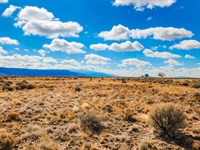
- Wild Horse Mesa: Colorado's Last Untamed Frontier. This 2.53-Acre property sits atop one of the most uniquely named and historically significant landforms in southern Colorado. Wild Horse Mesa rises from the San Luis Valley floor like a natural fortress, offering elevated views, superior drainage, and a sense of commanding presence that valley floor properties simply cannot match. The mesa's flat-topped terrain and gentle slopes create ideal building conditions while the elevated position provides natural protection from the occasional valley floor flooding that can affect lower-lying areas.
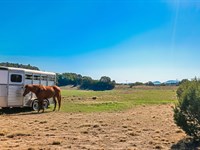
- The Legend of the Wild Horses Lives Here. Wild Horse Mesa earned its name honestly. Bands of wild mustangs still roam this broad mesa, descendants of horses brought to the region by Spanish conquistadors and early settlers over four centuries ago. These magnificent animals represent a living connection to the Old West, and property owners on Wild Horse Mesa regularly witness these free-roaming herds grazing across the landscape. Watching a band of wild horses silhouetted against a crimson sunset or galloping across the morning-misted mesa is an experience that money cannot buy anywhere else in Colorado.
- Strategic San Luis Valley Position. Your property occupies a prime location in the eastern portion of the San Luis Valley, North America's largest alpine valley. At approximately 7,800 feet elevation, you enjoy the benefits of high-altitude living including cooler summers, crystal-clear air, and over 300 days of annual sunshine. The San Luis Valley stretches more than 8,000 square miles between the towering Sangre de Cristo Mountains to the east and the San Juan Mountains to the west, creating a vast natural amphitheater of unparalleled beauty.
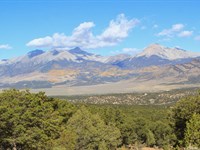
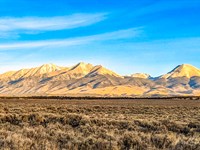
- Mountain Views That Define Colorado Living. From your elevated mesa position, the Sangre de Cristo Mountain Range dominates the eastern horizon in dramatic fashion. These peaks, whose Spanish name translates to "Blood of Christ Mountains," earned their name from the deep crimson alpenglow that paints their summits at sunrise and sunset. The range stretches over 100 miles from north to south, creating an unbroken wall of peaks that includes several fourteeners visible from your property. Mount Blanca stands tallest at 14,345 feet, appearing to guard the northern reaches of the valley like a snow-capped sentinel.
- Proximity to Essential Services and Attractions. Despite its remote character, Wild Horse Mesa offers reasonable access to modern conveniences. Fort Garland lies approximately 20 miles to the northeast, providing basic services including fuel, groceries, and the historic Fort Garland Museum. San Luis, Colorado's oldest continuously occupied town, sits roughly 18 miles to the south and offers additional services along with fascinating cultural heritage. Alamosa, the commercial hub of the San Luis Valley with full shopping, medical facilities, and Adams State University, is approximately 40 miles to the northwest via well-maintained highways.
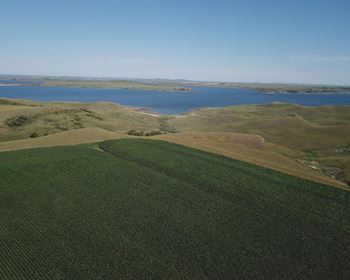
- Sanchez Reservoir: Your Neighborhood Water Recreation. One of Wild Horse Mesa's greatest advantages is its proximity to Sanchez Reservoir, located just minutes from your property. This substantial body of water covers over 2,800 surface acres when full and provides excellent fishing, boating, and wildlife viewing opportunities practically in your backyard. The reservoir's presence also moderates local weather patterns slightly and attracts abundant wildlife to the immediate area.
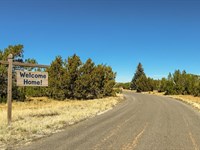
- Access and Road Conditions. Your property fronts on Mesa Drive, providing direct access from county-maintained roads. The mesa's well-established road network allows year-round access for standard vehicles during normal conditions, though a higher-clearance vehicle is recommended during winter months or after significant precipitation. The county grades roads periodically and provides snow removal on primary routes, ensuring you can reach your property throughout the seasons.
- Elevation Advantages of Mesa Living. The elevated mesa position offers several practical advantages beyond spectacular views. Natural drainage prevents water accumulation, the slightly higher elevation often escapes the valley's occasional temperature inversions, and the open terrain allows consistent wind flow that keeps the air fresh and provides excellent potential for wind energy generation. Mesa properties also tend to have better cellular signal reception due to fewer obstructions between your location and distant towers.
---
Recreational Opportunities
- Four-Season Outdoor Paradise. Wild Horse Mesa serves as your basecamp for exploring some of Colorado's most diverse recreational terrain. From the valley floor to the alpine peaks, from vast reservoirs to hidden mountain streams, the opportunities for adventure stretch in every direction. Whether your passion lies in fishing, hunting, hiking, camping, or simply exploring the backcountry, this region delivers experiences that rival anywhere in the American West.
- Sanchez Reservoir: Minutes From Your Door. The crown jewel of local recreation sits just a short drive from your property. Sanchez Reservoir offers nearly 3,000 surface acres of water recreation including fishing for rainbow trout, brown trout, northern pike, yellow perch, and channel catfish. Boat launches provide easy access for motorized craft, and the reservoir's size accommodates everything from kayaks to ski boats. The surrounding shoreline offers primitive camping areas, making extended fishing weekends both convenient and affordable.
- World-Class Fishing Waters Throughout the Region. Beyond Sanchez Reservoir, anglers can access numerous other productive waters within easy driving distance. Mountain Home Reservoir to the north provides excellent trout fishing in a scenic mountain setting. Smith Reservoir offers additional opportunities, and the Rio Grande River itself, located roughly 25 miles to the west, delivers legendary fly fishing for rainbow and brown trout in certain stretches. Local tackle shops in Alamosa can provide current conditions and guide recommendations.
- Great Sand Dunes National Park Adventure. Approximately 35 miles to the north, Great Sand Dunes National Park showcases one of nature's most improbable creations. Towering dunes reaching 750 feet in height rise dramatically against the backdrop of the Sangre de Cristo Mountains, creating a landscape that seems transported from the Sahara. Visitors enjoy sandboarding and sand sledding on the steep dune faces, hiking to the dune summits for panoramic views, and during late spring, wading in Medano Creek as it flows along the dune base creating a seasonal beach environment.
- Hiking and Backpacking Paradise. The Sangre de Cristo Wilderness, encompassing over 220,000 acres of protected backcountry, lies within an hour's drive to the northeast. This wilderness area contains numerous alpine lakes, over 50 miles of maintained trails, and access to several fourteener summits for peak baggers. The Rainbow Trail traverses nearly 100 miles along the western slope of the Sangre de Cristo Range, offering everything from day hikes to extended backpacking adventures.
- Fourteener Access for Peak Enthusiasts. Colorado's famous fourteeners draw climbers from around the world, and several of the state's highest peaks lie within reasonable driving distance. Mount Blanca, the fourth-highest peak in Colorado at 14,345 feet, anchors the northern Sangre de Cristos and offers routes ranging from challenging hikes to technical scrambles. Culebra Peak, Kit Carson Peak, Challenger Point, and Humboldt Peak all provide fourteener experiences within the region.
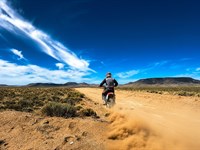
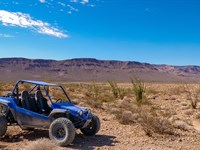
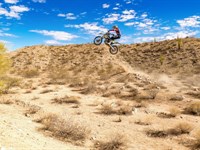
- Off-Highway Vehicle Exploration. The public lands surrounding Wild Horse Mesa offer extensive opportunities for ATV and UTV exploration. Miles of established trails and old mining roads crisscross the foothills and mountains, providing access to remote areas, historic mining sites, and scenic overlooks inaccessible by standard vehicles. The mesa itself, with its network of subdivision roads, allows easy off-highway vehicle travel between neighboring properties and access points.
- Winter Recreation Opportunities. When snow blankets the high country, recreational opportunities shift but never diminish. Wolf Creek Ski Area, located approximately two hours to the west, receives an average of 430 inches of snow annually, making it one of Colorado's premier powder destinations. Closer to home, cross-country skiing and snowshoeing opportunities abound on the mesa and surrounding public lands. Ice fishing on Sanchez Reservoir attracts dedicated anglers throughout the frozen months.
- Horseback Riding Heritage. What better place to enjoy horseback riding than a mesa named for wild horses? The open terrain, established trails, and gentle topography make Wild Horse Mesa ideal for equestrian activities. Property owners can stable their own horses on their land, and the surrounding landscape offers virtually unlimited riding opportunities across a mix of private property where permitted and adjacent public lands.
- Stargazing Under America's Darkest Skies. Light pollution, the bane of amateur astronomers everywhere, simply does not exist on Wild Horse Mesa. The region's isolation from major population centers, combined with typically clear and dry atmospheric conditions, creates some of the darkest night skies in the continental United States. The Milky Way blazes across the heavens with stunning clarity, meteor showers perform without competition from artificial light, and serious astronomers can observe deep-sky objects invisible from more populated areas.
---
Wildlife And Hunting
- Premier Big Game Territory. Wild Horse Mesa sits within Game Management Unit 83, one of Colorado's most productive big game units. The combination of diverse habitat types, abundant water sources, healthy wildlife populations, and careful management by Colorado Parks and Wildlife creates exceptional opportunities for both wildlife observation and legal hunting. The Trinchera elk herd, one of the largest in Colorado with populations sometimes exceeding 15,000 animals, ranges throughout this area.
- Elk: The Crown Jewel of Colorado Hunting. Rocky Mountain elk thrive in this region, moving between summer range in the high mountains and winter range on the valley floor and surrounding mesas. During September's rut, the haunting bugle of bull elk echoes across the landscape as these magnificent animals engage in their annual breeding rituals. Archery season opens in early September, followed by muzzleloader and multiple rifle seasons extending through November. Success rates in GMU 83 consistently rank among the highest in Colorado.
- Mule Deer Abundance. Mule deer populations remain strong throughout the Wild Horse Mesa area, with animals visible year-round for those who take time to observe. Large bucks with impressive antler development inhabit the broken terrain where mesa edges meet valley floor, using the topography for security cover while accessing prime feeding areas. Both archery and rifle seasons provide hunting opportunities, and the mesa's elevated position often allows glassing of deer at considerable distances.
- Pronghorn Antelope on the Open Range. The sagebrush flats and grasslands surrounding Wild Horse Mesa support healthy pronghorn populations. These remarkable animals, often called antelope though not true antelope at all, represent North America's fastest land mammal capable of sustained speeds exceeding 55 miles per hour. Watching a pronghorn herd race across the valley floor, seemingly moving without effort, ranks among the region's premier wildlife spectacles. Hunting pronghorn requires drawing a limited tag but offers a uniquely challenging and rewarding experience.
- Wild Horses: Living Western Heritage. The wild horse bands that give the mesa its name represent something increasingly rare in the modern American West. These free-roaming mustangs, protected under federal law, trace their lineage to horses that escaped from or were released by Spanish explorers and early settlers beginning in the 1600S. Unlike managed wild horse herds in other states, these animals live in a relatively natural state, their numbers regulated primarily by the carrying capacity of the land itself.
- Predator and Furbearer Populations. The complete ecosystem present in this region includes healthy predator populations. Coyotes provide nightly serenades, their yipping and howling echoing across the mesa in wild chorus. Mountain lions patrol the foothills and occasionally venture onto the mesa, though sightings remain rare due to their secretive nature. Bobcats inhabit the brushy draws and rocky outcrops, and red foxes hunt the grasslands at dawn and dusk.
- Upland Bird Opportunities. Wild turkeys have expanded their range significantly in recent decades and now inhabit suitable habitat throughout the region. Spring gobbler season draws dedicated turkey hunters, while fall seasons offer additional opportunities. Blue grouse inhabit the higher elevation forests, and dove hunting attracts wingshooters during early fall migrations.
- Waterfowl and Shorebirds. Sanchez Reservoir and other water bodies in the area attract migrating waterfowl during spring and fall. Ducks and geese pause during their journeys along the Central Flyway, while shorebirds probe the mudflats during low water periods. The reservoir also hosts nesting populations of various water birds throughout summer.
- Raptor Abundance. The skies above Wild Horse Mesa belong to raptors. Golden eagles soar on thermals rising from the sun-heated mesa, their seven-foot wingspans casting dramatic shadows on the ground below. Red-tailed hawks perch on fence posts watching for movement in the grass. In winter, bald eagles arrive to fish the open water of reservoirs and rivers. Peregrine falcons, recovered from near-extinction, nest on distant cliff faces and hunt the valley with breathtaking speed.
- Small Game and Varmint Hunting. Cottontail rabbits thrive in the brushy areas, providing excellent small game hunting and helping young hunters develop their skills. Prairie dog towns dot certain areas of the valley, offering year-round shooting opportunities and important predator prey base. Jackrabbits bound across the open flats, and ground squirrels populate rocky areas.
- Hunting Access and Regulations. GMU 83 includes substantial public land access through BLM holdings and National Forest lands in addition to private property. Hunters should familiarize themselves with property boundaries and obtain appropriate permission for any private land access. Colorado Parks and Wildlife regulates all hunting through a license and tag system, with many tags available over-the-counter and others requiring application in the annual draw. Current regulations should be consulted before any hunting activity.
Historical Significance
- Where Colorado's Story Began. Costilla County proudly claims the title "Where Colorado Began," and this designation carries genuine historical weight. The San Luis Valley witnessed European exploration and settlement long before the gold rushes that populated the Front Range. Spanish conquistadors entered this valley in the 1500S, making this region one of the first areas of present-day Colorado to feel European footsteps. Your property on Wild Horse Mesa sits within this historically significant landscape, surrounded by centuries of human drama, exploration, and settlement.
- Ancient Native American Presence. Long before Spanish explorers arrived, the San Luis Valley served as home and hunting ground for multiple Native American peoples. The Ute Nation dominated this region for centuries, utilizing the valley's resources during summer months and retreating to lower elevations during harsh winters. Archaeological evidence including petroglyphs, stone tools, and arrowheads indicates human presence in this valley extending back over 10,000 years. The Jicarilla Apache and Comanche also utilized portions of this territory, and their presence shaped the region's early recorded history.
- Spanish Exploration and Influence. Don Diego de Vargas led Spanish forces through this region in 1694, making the San Luis Valley one of the earliest European-explored areas in what would become Colorado. The Spanish influence remains visible today in place names, architectural styles, and cultural traditions that persist in local communities. The Sangre de Cristo Mountains received their evocative name from Spanish explorers who witnessed the peaks glowing blood-red at sunset and sunrise, a phenomenon you can observe from your Wild Horse Mesa property to this day.
- The Land Grant Era. The Mexican government issued large land grants in this region during the early 1800S, including the famous Sangre de Cristo Land Grant that encompassed much of present-day Costilla County. These grants established patterns of settlement and land use that influence the area to this day. The communal land traditions brought from Spain and Mexico created a unique system of shared resources, with grazing rights and timber access distributed among grant heirs in ways that still function in certain areas.
- Colorado's Oldest Town. San Luis, located approximately 18 miles south of Wild Horse Mesa, holds the distinction of being Colorado's oldest continuously occupied town. Founded in 1851 by Hispanic settlers from Taos, New Mexico, San Luis predates Colorado statehood by 25 years. The town retains its original Spanish Colonial plaza layout, with the historic Catholic church and traditional adobe architecture creating a direct visual connection to the territorial period. Walking the streets of San Luis today provides a living history lesson unavailable anywhere else in Colorado.
- Fort Garland and the Frontier Military. Established in 1858 to protect settlers and maintain peace with the Ute Nation, Fort Garland served as a crucial military outpost during Colorado's territorial period. The legendary frontiersman Kit Carson commanded the fort from 1866 to 1867, negotiating with tribal leaders and managing the complex relationships between settlers, the military, and Native peoples. The fort also hosted Buffalo Soldier units, African American cavalry troops who served with distinction on the frontier. Today, Fort Garland operates as a museum preserving this military heritage just 20 miles from your property.
- Wild Horse Mesa's Unique Heritage. The mesa itself carries historical significance through its association with the wild horse herds that gave it its name. These mustangs descend from horses that escaped from or were released by Spanish explorers, missionaries, and early settlers beginning in the 1600S. For over four centuries, these animals have roamed this mesa, surviving harsh winters, predators, and the encroachment of civilization. They represent one of the last truly wild horse populations in Colorado and a living connection to the region's Spanish Colonial heritage.
- Mining History in the Surrounding Mountains. The mountains visible from Wild Horse Mesa witnessed significant mining activity during the late 1800S and early 1900S. Prospectors seeking gold, silver, and other precious metals established claims throughout the Sangre de Cristo Range. While Costilla County never experienced the massive booms of Cripple Creek or Leadville, numerous small mining operations extracted valuable ore from these mountains. Abandoned mine sites, old cabin ruins, and historic roads built to access remote claims still dot the high country, offering exploration opportunities for history enthusiasts.
- The Railroad Era. The Denver and Rio Grande Railroad reached the San Luis Valley in the late 1870S, transforming the region's economy and connectivity. Rail lines enabled efficient transport of agricultural products, livestock, and mining ore, spurring development throughout the valley. While the narrow-gauge tracks no longer carry regular traffic, the railroad's influence shaped town locations, road patterns, and economic development in ways still visible today.
- Los Caminos Antiguos Scenic Byway. This designated scenic byway passes through the region, following routes used by Spanish traders, early settlers, and Native peoples for centuries. The byway connects historic sites including Fort Garland, San Luis, and numerous small communities, with interpretive signs explaining the historical significance of each location. Driving this route provides context for the layers of history surrounding your Wild Horse Mesa property.
---
Building And Development Options
- Maximum Freedom Under County Zoning. Your Wild Horse Mesa property falls under Costilla County's Vacant Residential zoning, which provides substantial flexibility for development while maintaining basic standards that protect property values throughout the area. Unlike many subdivisions that burden property owners with restrictive covenants and architectural committees, Wild Horse Mesa operates without any homeowners association or property owners association. This means your building decisions remain between you and the county, with no nosy neighbors or volunteer committees second-guessing your choices.
- Site-Built Home Requirements. For those planning traditional stick-built construction, Costilla County requires a minimum of 600 square feet of habitable floor space. This modest requirement accommodates everything from efficient small homes to expansive mountain retreats. The county adheres to standard building codes ensuring structural safety and proper utility installations, but does not impose aesthetic requirements or architectural style mandates. You can build a log cabin, a modern design, a traditional ranch home, or virtually any style that meets basic code requirements.
- Mobile and Manufactured Home Options. Costilla County welcomes manufactured homes on Wild Horse Mesa properties, provided the home was built in 1976 or later when HUD standards for manufactured housing took effect. This option provides an affordable and rapid path to establishing your residence. Manufactured homes must be properly installed on a permanent foundation with appropriate utility connections, but once established, they provide comfortable, code-compliant housing at a fraction of site-built construction costs.
- Accessory Structures and Outbuildings. Beyond your primary residence, the county permits construction of garages, workshops, barns, storage buildings, and other accessory structures. Many property owners build these support structures first, creating secure storage for tools and materials while they plan their primary residence. The mesa's gentle terrain and stable soils accommodate virtually any outbuilding configuration, from simple storage sheds to elaborate workshop facilities.
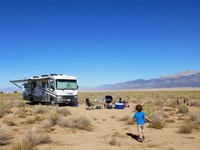
- RV and Camping Flexibility. One of Wild Horse Mesa's most attractive features for new owners is the ability to use your property immediately while planning longer-term development. County regulations permit camping for 14 days within any three-month period without any permit requirement. This allows regular weekend visits and extended camping trips while you explore your land and finalize building plans. For those ready to begin development, Temporary RV Occupancy permits allow stays up to 180 days annually once you have installed either a permitted well or cistern system along with septic or approved waste management.
- The Path to Permanent Residency. Costilla County has established clear procedures for transitioning from recreational use to permanent residency. The Temporary RV Occupancy permit, available for a $250 fee renewable in 60-day increments, allows you to live on-site while constructing your permanent home. This practical approach lets owner-builders supervise their projects closely while avoiding the expense of off-site housing during construction. The county planning office, reachable at Monday through Thursday, provides guidance throughout the permitting process.
- Septic System Requirements. Since Wild Horse Mesa lies outside any municipal sewer service area, all permanent residences require approved septic systems. The mesa's sandy loam soils typically provide excellent percolation rates, making conventional septic systems both practical and affordable. Installation costs generally range from $5,000 to $8,000 depending on system size and site conditions. The county requires percolation testing and system approval before installation, ensuring your system will function properly for decades.
- Water System Options. Your property will require an independent water supply, with holding tank or cistern systems being the most common approach on Wild Horse Mesa. A properly sized cistern, typically 1,500 to 2,500 gallons, stores water delivered by truck or hauled personally from fill stations in area towns. The Alamosa Water Department offers fill services at just $2.50 per 500 gallons, making water hauling surprisingly economical. Some property owners eventually drill wells, though depths and yields vary across the mesa.
- Off-Grid Power Solutions. Wild Horse Mesa's isolation from utility infrastructure creates opportunity rather than limitation for energy-independent property owners. The region's exceptional solar resources, with over 300 sunny days annually and high-altitude solar intensity, make photovoltaic systems highly effective. Many residents combine solar panels with battery storage and backup generators for reliable year-round power. The mesa's consistent breezes also support small wind turbine installations for those seeking diversified renewable energy production.
- No Timeline Pressure. Unlike some areas that require construction within specified periods, Costilla County imposes no deadline for developing your property. You can hold your land indefinitely, visiting for camping and recreation while planning your eventual build. This flexibility allows you to accumulate resources, refine your plans, and build when your circumstances align perfectly rather than rushing construction to meet arbitrary deadlines.
---
Climate And Terrain
- High Desert Mountain Climate. Wild Horse Mesa experiences the classic high-altitude semi-arid climate that characterizes the San Luis Valley. At approximately 7,800 feet elevation, you enjoy the benefits of thin, dry air including intense sunshine, comfortable summer temperatures, and dramatic temperature swings between day and night. Annual precipitation averages just 8 to 12 inches, with the majority falling during summer monsoon thunderstorms and winter snow events. This low moisture environment keeps humidity comfortable year-round and reduces the mold, mildew, and rot concerns that plague more humid climates.
- Summer Perfection. Summer on Wild Horse Mesa delivers the mountain climate that draws people to Colorado. Daytime high temperatures typically reach the mid-70s to low 80s Fahrenheit, warm enough for comfortable outdoor activity but rarely oppressively hot. Nights cool dramatically, often dropping into the 40s even during July and August, ensuring refreshing sleep without air conditioning. The summer monsoon pattern brings afternoon thunderstorms several times weekly during July and August, providing brief but intense rainfall that greens the landscape and fills seasonal watercourses.
- Winter Character. Winters bring cold temperatures and periodic snow, but the climate remains more moderate than many expect for this elevation. Daytime highs typically reach the 30s Fahrenheit, and the intense high-altitude sunshine often makes these temperatures feel warmer than they read on the thermometer. Snowfall on the mesa averages 30 to 50 inches annually, spread across numerous small events rather than concentrated in massive storms. The dry climate causes snow to sublimate quickly, and sunny days between storms often clear roads and exposed ground within days.
- Shoulder Season Transitions. Spring and fall provide extended transition periods of generally pleasant weather. Spring can be unpredictable, with late snowstorms possible through April, but May typically delivers warming temperatures and the first wildflowers. Fall stretches from September through early November, offering what many consider the region's finest weather. Cool nights, warm sunny days, golden aspen displays in the mountains, and minimal precipitation create ideal conditions for outdoor activity and construction projects.
- Mesa Terrain Advantages. Wild Horse Mesa's flat-topped terrain offers significant practical advantages for property development. The gentle slopes, typically ranging from 3 to 9 percent, provide natural drainage while avoiding the challenges of steep hillside construction. Building sites can be oriented for optimal solar exposure without extensive grading, and access roads maintain reasonable grades that remain passable in adverse weather. The mesa's elevation above the surrounding valley floor also provides superior drainage during heavy precipitation events.
- Soil Conditions for Building. The mesa's soils, primarily sandy loam compositions, offer excellent characteristics for construction and septic system installation. These well-drained soils provide stable foundations, prevent water accumulation around structures, and allow proper percolation for septic leach fields. Unlike clay-heavy soils that expand and contract with moisture changes, sandy loam maintains consistent volume, reducing foundation movement and associated structural concerns.
- Wind Patterns and Energy Potential. The San Luis Valley's geography creates consistent wind patterns that sweep across Wild Horse Mesa. Prevailing winds typically flow from the west and southwest, with afternoon breezes common during warmer months as the sun heats the valley floor. Wind speeds average 10 to 12 miles per hour, sufficient for small wind turbine energy generation while rarely reaching damaging intensities. Property owners can orient structures and windbreaks to minimize unwanted wind exposure while capturing breeze benefits for cooling and energy production.
- Severe Weather Considerations. The region experiences relatively few severe weather events compared to lower-elevation areas. Tornadoes are essentially unknown due to the high elevation and surrounding mountain terrain. Flooding concerns on the mesa remain minimal thanks to the elevated position and excellent drainage. Summer thunderstorms can produce brief heavy rain, small hail, and lightning, but these storms typically pass within an hour. Winter blizzards occasionally sweep through, but the dry snow and typically quick clearing limit their impact.
- Growing Season and Agriculture. The high elevation limits but does not eliminate agricultural possibilities. The frost-free growing season typically spans late May through mid-September, roughly 100 to 120 days depending on local microclimates. Hardy vegetables, root crops, and cool-season plants can thrive in this environment, particularly with season-extending techniques like cold frames, greenhouses, and row covers. Many property owners successfully maintain productive gardens through careful variety selection and microclimate management.
- Exceptional Air Quality. The combination of sparse population, minimal industrial activity, and consistent air movement produces air quality that ranks among the best in the nation. Visibility often exceeds 100 miles on clear days, and the absence of urban smog and pollution creates a breathing environment noticeably different from populated areas. Many residents report respiratory improvements after relocating to the mesa, and the clean air contributes to the spectacular clarity of both daytime views and nighttime stargazing.
Off-Grid Living Potential
- Independence as a Way of Life. Wild Horse Mesa represents off-grid living at its finest, where independence from utility companies translates directly into personal freedom and reduced monthly expenses. The absence of municipal utilities is not a limitation but an opportunity to create a self-sufficient homestead that operates on your terms. Modern technology has made off-grid living more comfortable and practical than ever before, and the mesa's natural characteristics support these systems exceptionally well.
- Solar Power Excellence. The San Luis Valley boasts some of the strongest solar resources in the entire United States, and Wild Horse Mesa captures these benefits fully. With over 300 sunny days annually and the increased solar intensity that comes with high elevation, photovoltaic panels operate at peak efficiency throughout the year. A properly sized solar array with battery storage can power all modern conveniences including refrigeration, lighting, electronics, power tools, and climate control. Many mesa residents report that their solar systems produce more power than they consume during summer months, building reserves for shorter winter days.
- Wind Energy Supplementation. The consistent breezes that sweep across Wild Horse Mesa provide excellent supplemental energy production through small wind turbines. Wind generation often peaks during periods when solar production decreases, such as cloudy days and winter months, creating natural complementarity between these renewable sources. A combined solar and wind system provides more consistent year-round power production than either technology alone, reducing reliance on backup generators.
- Backup Generator Strategy. Most off-grid property owners maintain a propane or gasoline generator for backup power during extended cloudy periods or unusually high demand situations. These generators typically see limited use in well-designed systems but provide peace of mind and emergency capability. Propane generators offer advantages for off-grid applications including longer fuel storage life, cleaner combustion, and easier maintenance compared to gasoline units.
- Water Independence Through Cistern Systems. Your Wild Horse Mesa property will utilize a cistern or holding tank system for water supply, the most common and practical approach for mesa properties. A typical installation includes a 1,500 to 2,500 gallon storage tank, either buried for freeze protection or housed in an insulated enclosure, connected to your home through a pressure pump system. Water delivery services operate throughout the San Luis Valley, or you can haul water yourself from fill stations like the Alamosa Water Department, which charges just $2.50 per 500 gallons. Many property owners find that a 2,000-Gallon tank provides several weeks of normal household use between fills.
- Water Conservation Lifestyle. Living with a cistern system naturally encourages water-conscious habits that reduce consumption without sacrificing comfort. Low-flow fixtures, efficient appliances, and thoughtful usage patterns can reduce household water needs dramatically compared to municipal-supplied homes where water seems unlimited. Many off-grid residents report that water awareness becomes second nature within weeks, and they appreciate the connection to this essential resource that metered city water never provides.
- Waste Management Solutions. Septic systems provide reliable waste management for Wild Horse Mesa properties, with the mesa's sandy loam soils offering excellent percolation characteristics. Standard septic installations include a buried tank for solids separation and a leach field for effluent dispersal. These systems require minimal maintenance beyond periodic tank pumping every few years and provide decades of trouble-free service. Installation costs typically range from $5,000 to $8,000 depending on system size and site-specific factors.
- Communication Connectivity. Despite its remote character, Wild Horse Mesa supports modern communication needs through multiple technologies. Cellular coverage from major carriers reaches most mesa locations, providing voice and data connectivity. Satellite internet services, particularly newer low-earth-orbit systems like Starlink, deliver high-speed broadband capable of supporting remote work, video streaming, and all typical internet applications. These technologies allow mesa residents to maintain professional careers, stay connected with family, and access online services while enjoying rural isolation.
- The Freedom of Self-Sufficiency. Off-grid living on Wild Horse Mesa delivers something increasingly rare in modern America: genuine independence. Your power comes from the sun and wind rather than distant power plants and vulnerable grid infrastructure. Your water supply sits in a tank you control rather than flowing through miles of aging municipal pipes. Your waste management operates on your property under your supervision. This self-sufficiency provides both practical resilience during emergencies and the psychological satisfaction of providing for yourself and your family.
---
Investment And Market Analysis
- Colorado Land Values Continue Rising. Colorado's population growth and limited land supply have driven real estate values steadily upward for decades, and this trend shows no signs of reversing. While the Front Range has become prohibitively expensive for many buyers, areas like the San Luis Valley offer entry points that remain accessible to middle-class Americans. Smart investors recognize that today's affordable rural land often becomes tomorrow's sought-after property as development pressure radiates outward from population centers.
- Costilla County's Value Proposition. Land prices in Costilla County remain among the lowest in Colorado, creating exceptional value for buyers willing to embrace rural living. Properties that would cost hundreds of thousands of dollars in mountain resort communities or Front Range suburbs sell for a fraction of that price here. This affordability allows buyers to acquire larger parcels, hold land without financial strain, and build equity as values appreciate over time.
- Remote Work Revolution. The dramatic expansion of remote work capabilities has fundamentally changed where people can live while maintaining professional careers. Workers no longer need daily proximity to offices, opening rural areas to populations previously tied to urban and suburban locations. Wild Horse Mesa, with its combination of affordable land, reliable satellite internet, and exceptional quality of life, positions perfectly to benefit from this ongoing shift in work patterns.
- Minimal Holding Costs. One of Wild Horse Mesa's most attractive investment characteristics is the extremely low cost of holding undeveloped land. Annual property taxes of approximately $55 make long-term ownership practical for virtually any budget. Without HOA dues, utility bills, or mandatory development timelines, you can hold your property indefinitely while values appreciate, visiting for recreation and gradually planning your eventual development.
- Growing Demand for Rural Retreats. Recent years have demonstrated dramatically increased interest in rural properties that offer escape from urban density and dependence on fragile infrastructure systems. Wild Horse Mesa provides exactly what this growing market segment seeks: affordable land, building flexibility, off-grid capability, and genuine isolation from population centers. Whether marketed as a primary residence, vacation retreat, or emergency preparedness property, mesa land appeals to expanding buyer pools.
- Development Adds Value. Improved properties consistently command significant premiums over raw land. Adding a cistern system, septic installation, or basic structures transforms speculative land into functional property, substantially increasing both utility and resale value. Investors can pursue gradual improvement strategies, adding infrastructure over time as resources permit, building equity through sweat equity and targeted capital investment.
- No Artificial Restrictions. The absence of HOA covenants and architectural restrictions preserves maximum flexibility for both use and resale. You can develop your property according to your own vision rather than committee approval, and future buyers will appreciate this same freedom. Properties burdened with restrictive covenants often languish on the market while unrestricted parcels attract broader buyer interest.
- Generational Wealth Building. Land ownership represents one of the oldest and most reliable wealth-building strategies in human history. Unlike financial instruments that can lose value overnight, land provides tangible assets that have appreciated over virtually every long-term holding period in American history. Purchasing Wild Horse Mesa property today creates potential generational wealth as Colorado's population continues growing and undeveloped land becomes increasingly scarce.
- Recreational Value Adds Personal Returns. Beyond pure financial considerations, your Wild Horse Mesa investment pays dividends in quality of life from day one. Every camping trip, every sunset watched from your own land, every encounter with wild horses or wildlife delivers returns that financial investments cannot match. This combination of financial potential and immediate personal enjoyment makes land ownership uniquely rewarding compared to abstract investment alternatives.
---
Community And Services
- Fort Garland Services. Fort Garland, located approximately 20 miles northeast of Wild Horse Mesa, provides the nearest concentration of basic services. This small community offers fuel, convenience store shopping, and limited groceries. The historic Fort Garland Museum draws visitors and adds cultural depth to this small community. Several restaurants serve travelers and locals, and basic automotive services are available. Fort Garland sits at the junction of Highway 160 and Highway 159, providing easy highway access in multiple directions.
- San Luis Heritage and Services. Colorado's oldest town, San Luis, lies roughly 18 miles south of Wild Horse Mesa. Despite its small population of approximately 600 residents, San Luis provides essential services including the historic R&R Market that has operated continuously since 1857. A community health clinic offers basic medical care, and the town's rich cultural heritage makes it a fascinating destination for exploration. Local government offices including the county planning department operate from San Luis.
- Alamosa Regional Hub. Alamosa, the commercial center of the San Luis Valley, offers comprehensive services approximately 40 miles northwest of Wild Horse Mesa. This city of roughly 10,000 residents provides major retail including Walmart, Safeway, and Home Depot. The San Luis Valley Regional Medical Center delivers full hospital services including emergency care. Adams State University adds educational opportunities and cultural events. Alamosa satisfies virtually all shopping, medical, and service needs for Wild Horse Mesa residents.
- Emergency Services Coverage. Costilla County Sheriff deputies patrol rural areas including Wild Horse Mesa, with headquarters in San Luis. Volunteer fire departments in Fort Garland and San Luis provide fire protection and emergency medical response. While response times naturally exceed urban standards due to distances involved, emergency services do reach mesa properties. Residents should maintain appropriate emergency preparedness given the rural setting.
- Regional Connections. Highway 160 provides east-west connectivity, reaching Interstate 25 at Walsenburg approximately 70 miles east. Highway 159 runs north-south through the region. Alamosa offers the nearest commercial airport with limited scheduled service, while Colorado Springs and Denver international airports provide full connectivity within three to four hours driving distance.
---
Seasonal Activities And Conclusion
- Spring Awakening. As winter releases its grip, Wild Horse Mesa transforms with emerging green grass and the first wildflowers. Migratory birds return to the valley, and wildlife becomes increasingly active after winter's quiet. Spring provides ideal conditions for property improvements, construction projects, and exploring the surrounding landscape as it awakens from dormancy. The wild horse herds often foal during spring, adding young mustangs to the mesa's iconic bands.
- Summer Adventures. Long summer days invite full utilization of the mesa's recreational opportunities. Fishing at nearby Sanchez Reservoir peaks as water temperatures warm. Hiking trails in the surrounding mountains become accessible as snowpack melts. Camping on your property under brilliant starry skies becomes a regular pleasure. The comfortable temperatures and abundant sunshine make summer the prime season for outdoor living.
- Autumn Glory. Fall brings hunting seasons, golden aspen displays in the distant mountains, and perhaps the year's finest weather. Cool nights and warm sunny days create perfect conditions for outdoor activity. Elk bugling echoes from the foothills during September's rut. The wild horses grow thick winter coats as they prepare for colder months. Many consider autumn the San Luis Valley's finest season.
- Winter Serenity. Snow transforms Wild Horse Mesa into a quiet winter wonderland. The wild horses paw through snow to reach grass beneath, demonstrating the hardiness that has sustained their herds for centuries. Clear winter nights offer the year's finest stargazing as cold air enhances atmospheric clarity. Ice fishing at Sanchez Reservoir attracts dedicated anglers, and nearby Wolf Creek Ski Area provides world-class skiing within two hours.
- Your Wild Horse Mesa Legacy Awaits. This 2.53-Acre property offers something increasingly rare in modern America: genuine freedom to create your own path. No homeowners association will dictate your choices. No utility company will send monthly bills. No arbitrary restrictions will limit your vision. Here on Wild Horse Mesa, where wild horses still roam free and the spirit of the frontier lives on, you can build the life you have imagined. The mesa has witnessed four centuries of human dreams since Spanish horses first ran wild across its surface. Now it awaits your chapter in its continuing story. The question is not whether Wild Horse Mesa represents opportunity. The question is whether you will seize that opportunity while it remains within reach.
The details provided in this property listing are believed to be reliable but are not warranted. Prospective buyers should perform their own research and verification of all information before making purchase decisions.
Land Maps & Attachments
Directions to Land
From Port Charlotte, head toward US-41 N and continue for 0.4 miles.
Use the left two lanes to turn left onto FL-776/El Jobean Rd and drive 4 miles.
Turn right onto Jacobs St and continue for 1 mile.
Turn right onto Meetze St and drive 0.6 miles.
Turn right onto McClellan Ave and follow for 0.2 miles to reach the property on the right.
More Land Details
More Land from Jon and Valari Burnett
 1.2 AC : $11.5K
- 0.5 AC : $10.5K
- 5.1 AC : $16.9K
- 5 AC : $7.9K
- 0.3 AC : $8.9K
- 2.6 AC : $6.9K
- 7.1 AC : $18.9K
- 0.2 AC : $13.5K
- 5.8 AC : $9.9K
- 4.7 AC : $14.9K
- 0.6 AC : $13.5K
- 1.3 AC : $6.9K